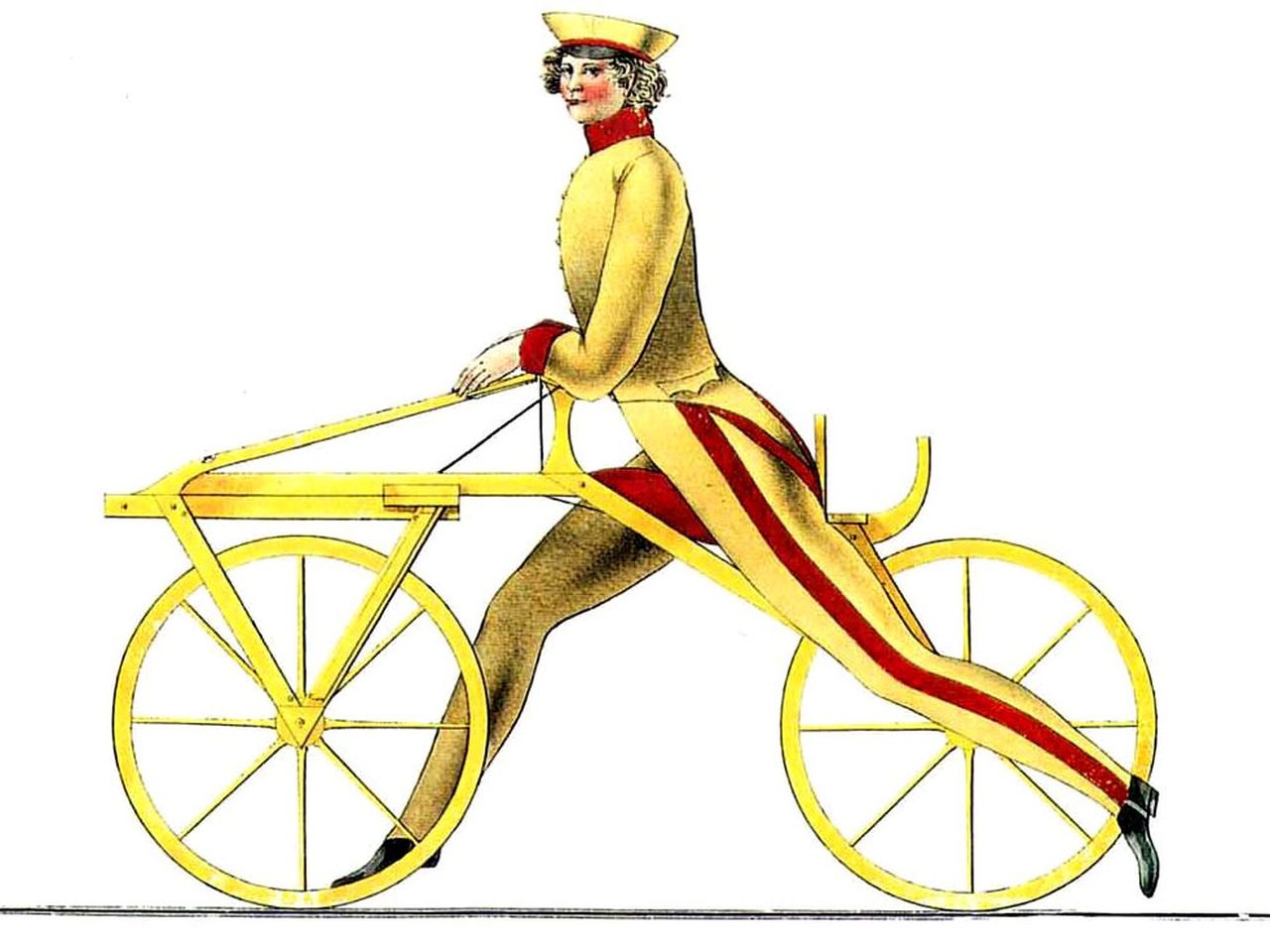
The early history of biking began in the early 19th century with the Laufmaschine or "running machine," invented in 1817 by Baron Karl von Drais in Germany. This device, later called the Draisine, was a two-wheeled wooden frame with a steerable front wheel, but it lacked pedals. The rider propelled it by pushing off the ground with their feet, essentially running while seated. A significant development occurred around the 1860s in France with the creation of the vélocipède, nicknamed the "boneshaker," which introduced pedals attached directly to the front wheel's axle. This direct-drive system later evolved into the large, unstable, and often dangerous penny-farthing of the 1870s, which required riders to balance atop a massive front wheel to gain speed.
The modern bicycle took shape with the introduction of the safety bicycle in 1885, pioneered by John Kemp Starley's Rover. This design was a major breakthrough, featuring two wheels of roughly equal size, a chain drive that transmitted power to the rear wheel, and a rider position much closer to the ground, making it significantly safer and easier to mount. This transformation, combined with the 1888 invention of the pneumatic tire by John Boyd Dunlop, dramatically improved comfort and accessibility. The safer, more comfortable design sparked a massive cycling craze in the 1890s and became a key tool for social change, especially for women, by providing a personal means of freedom and transportation, thereby challenging restrictive social norms.